About Staurikosaurus fossils
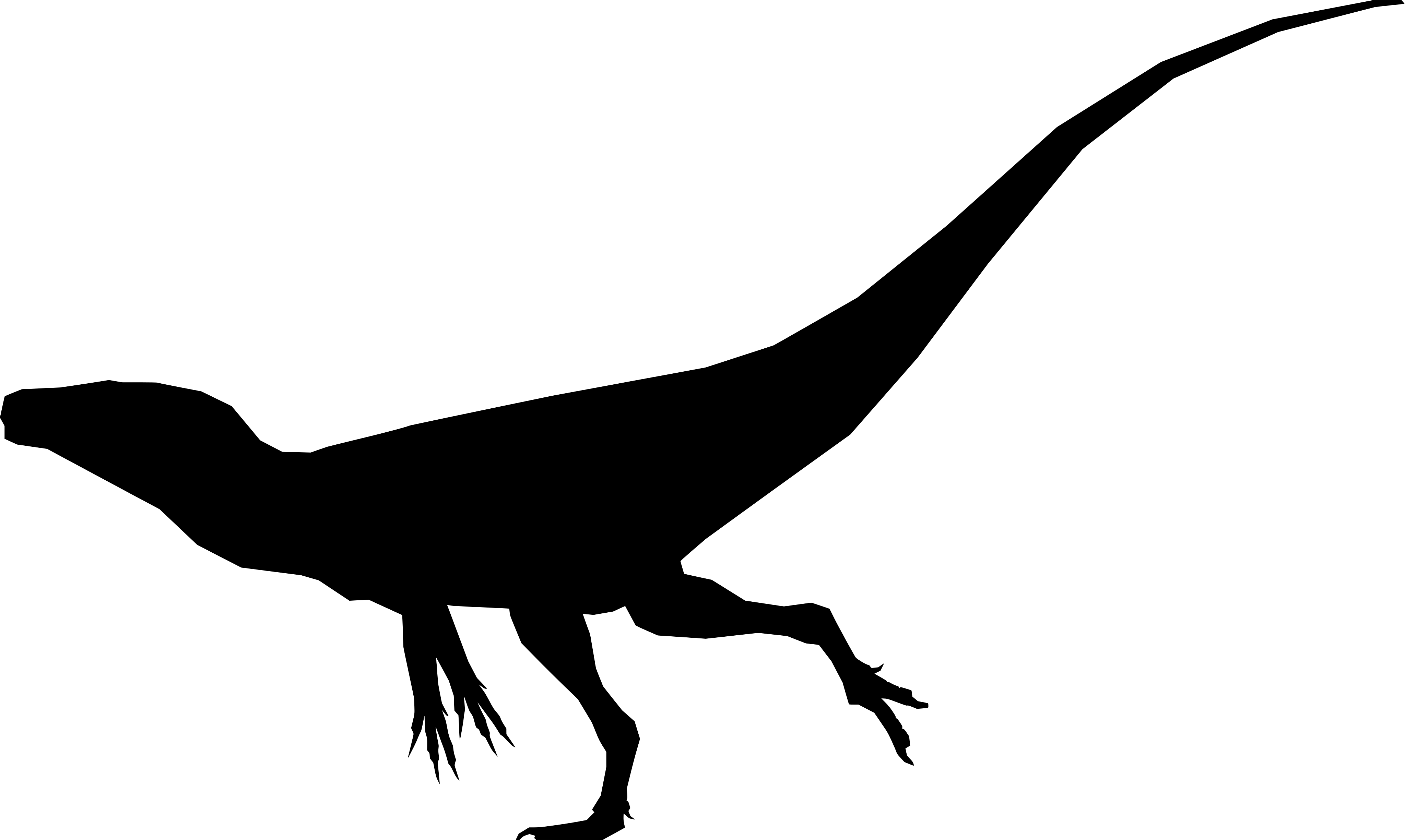
Staurikosaurus is a genus of dinosaurs. The database records one species of it: Staurikosaurus pricei.
All 2 finds on the map are in Brazil.
The rock formation with the most finds is called Santa Maria, with 2. The rocks are 237 to 227.3 million years ago, in the Triassic period.
Genus of reptiles (fossil). (Description from Wikidata, CC0.)
Read about Staurikosaurus on Wikipedia.
- 2finds
- 1country
- 237oldest, million years ago
- 227.3youngest, million years ago
Which countries have Staurikosaurus fossils?
| Country | Finds | Share |
|---|---|---|
| Brazil | 2 | 100% |
Rock formations that produced Staurikosaurus
A formation is a named body of rock. These are the ones with the most Staurikosaurus finds.
| Formation | Finds |
|---|---|
| Santa Maria | 2 |
Other dinosaurs found in Brazil
- Deinonychus (47)
- Carcharodontosaurus (44)
- Neuquensaurus (15)
- Antarctosaurus (8)
- Aeolosaurus (6)
- Limaysaurus (6)
- Baurutitan (4)
- Guaibasaurus (3)
- Ibirania (3)
- Maxakalisaurus (3)
More to explore
Before you go fossil hunting. A dot shows where a find was recorded, not where you may dig. Many fossil sites are on private or protected land and collecting rules differ by country. Check the rules before collecting and never dig on protected sites.
Questions about Staurikosaurus
Where was Staurikosaurus found?
Staurikosaurus fossils are recorded in the Paleobiology Database from Brazil. Most of the 2 finds on this map (2) are from Brazil. The rock formation with the most finds is the Santa Maria (2).
How old are Staurikosaurus fossils?
Finds of Staurikosaurus on this map date from 237 to 227.3 million years ago, which is the Triassic period. Ages are ranges, because rock layers are dated to a stage and not to a single year.
Where can I see Staurikosaurus fossils near me?
Open the map and press Near me to list the nearest dinosaur finds and the most notable dinosaurs found around you. Remember that a dot shows where scientists recorded a find, not where you can dig: many fossil sites are on private or protected land, so check the rules before collecting and never dig on protected sites.